Beyond "Build vs. Buy", Part 1: A Strategic Framework for AI Decisions

Executive Summary
Stop asking "build vs. buy" for your AI initiatives. This decision framework focuses on time-to-value and domain expertise, helping leaders turn ideas into measurable outcomes while avoiding the "Developer Trap" that causes many AI initiatives to fail.
Over the past year, I've had dozens of conversations with founders, business leaders, and innovation teams exploring how AI can transform their business.
Almost every conversation eventually arrives at the same question:
"Should we build AI in-house or buy an AI solution?"
But this isn't the first question to ask. The better approach is to ask:
How do you turn ideas into value fast, without unnecessary cost, risk, or complexity?
Because despite all the excitement around AI, most organizations aren't struggling to come up with ideas. They're struggling to turn those ideas into products or internal tools that deliver measurable outcomes.
The reality is that building an AI-powered product involves far more than simply connecting to a large language model.
At first glance, it seems like a straightforward decision. With powerful new model releases every few weeks or months, most recently Anthropic’s Mythos/Fable models (and subsequent suspension), it is easy to be seduced. Whether it’s a new user-facing product or an internal operations/efficiency tool, let’s vibe code it! What could go wrong?
You need Infrastructure. Security. Governance. Workflow orchestration. Integrations. Data management. User experience. Monitoring. Compliance. Continuous improvement. Maintenance. And more.
This is hard to get RIGHT, even for skilled, experienced, and abundantly resourced organizations. Things don’t always behave the way you expect and can have serious consequences, including breaches.
Yet many companies underestimate what it takes to move from a promising idea to prototype to production to market-ready.
As a result, projects that begin with tremendous enthusiasm often become expensive experiments that never make it beyond the prototype stage.
According to an MIT study, “95% of initiatives fail to deliver meaningful ROI within the first 6 months.” This is from 2025, so hopefully things have improved in 2026.
A Strategic Decision Framework for AI Initiatives
To determine whether to build or buy, it is important to consider multiple factors. A simplified framework could start like this and then be tailored for your organization or use cases.
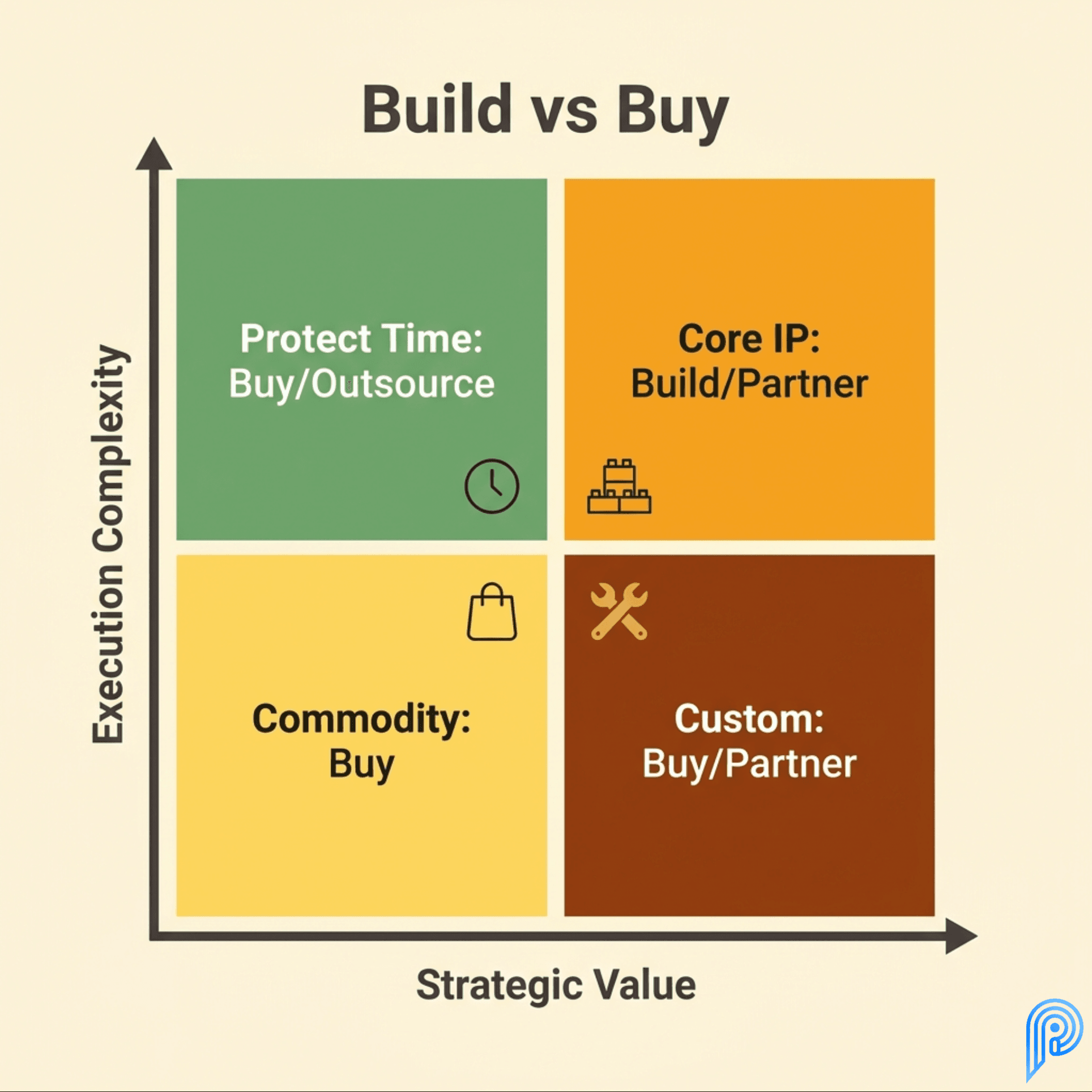
Figure 1: Strategic Decision Framework for AI Initiatives
| Category | Execution vs. Strategic Value | Recommended Strategy |
|---|---|---|
| Commodity | Low, Low | Buy (Off-the-Shelf) |
| Protect Time | High, Low | Buy/Outsource (Avoid "Developer Trap") |
| Core IP | High, High | Build/Partner (Competitive diff) |
| Custom | Low, High | Buy/Partner (Customization via specialists) |
Key Criteria for Evaluating Your AI Build vs. Buy Strategy
- Goals: Are you solving for customer-facing revenue generation or internal productivity/efficiency?
- Complexity: Does the solution require low or high technical complexity?
- Importance: Is the project nice-to-have or mission-critical? Just because your team can do it, doesn't mean it's the best use of their time. Avoid the "developer trap"!
- Expertise: Do you have the necessary staff and talent? Is your team non-technical staff or do you have a dedicated engineering team? A common misconception is you just need “IT” people. There is a distinction between an IT team and an engineering team. The reality is you need both.
- Risk: What is the risk profile, ranging from low to high revenue or operational impact? If something goes wrong, what's the impact to your organization? Can your organization absorb the after-effects?
Real-World Application: Commercial Real Estate
The Industry Challenge
The exercise is particularly important in industries where decisions depend on complex processes, specialized knowledge, requiring high compliance, or highly structured workflows. Take commercial real estate as an example.
For decades, design review has been one of the most time-consuming and manual processes in the industry. Teams spend countless hours reviewing tenant submissions, architectural drawings, lease requirements, operational standards, and compliance documents before approving a project.
The process is slow, expensive, and requires time-consuming iteration between a small number of busy professionals already saddled with multiple responsibilities.
The Partnership Approach (Case Study)
Key Results
- Challenge: Manual design review processes.
- Strategy: "Build/Partner" approach using a specialized foundation.
- Result: 80% reduction in time-to-market; MVP delivered in 2 months.
This is exactly the challenge that ADR Pro was built to solve.
Developed in partnership with the Vynes team, ADR Pro is an AI-powered review and audit platform designed to help commercial real estate teams streamline design review processes and drastically reduce the time it takes to open stores.
What's interesting isn't just the technology itself.
It's how the product came to life.
When the Vynes team set out to execute their vision, they weren't looking to build another AI chatbot. They wanted to create a platform capable of understanding complex drawings, documents, standards, and human-centric review workflows in the same way experienced professionals do, along with enterprise support.
Had they chosen to build everything from scratch, the journey would have looked very different.
We estimated that developing ADR Pro independently would have required hiring a dedicated team spending roughly a year building the product, the underlying technology, and processes.
Instead, by partnering with specialized platforms, the team was able to move from concept to a working MVP in approximately two months.
That's more than an 80 percent reduction in market time with the Build/Partner approach, while also reducing risk and upfront capital.
Domain Expertise: Your Moat
The technology landscape is moving incredibly fast. Every month brings new models, new frameworks, new tools, and new capabilities. What was difficult a year ago may soon become standard.
But there is one thing that remains much harder to replicate: Domain expertise.
- Understanding how a shopping center reviews tenant plans.
- Understanding how a bank evaluates fraud risk.
- Understanding how an insurance company processes claims.
- Understanding how a healthcare provider manages patient workflows.
- Understanding how a logistics company handles exceptions across a supply chain.
Those are not purely technology problems. They are business problems. And the organizations that win in the AI era will be the ones that combine deep domain expertise with the right technology foundation, and the right execution approach and speed.
Key Insights
- Focus on expertise: AI is democratizing; industry knowledge and data is your real competitive advantage.
- Solve business problems: AI success solves operational friction (like plan reviews) or creates value, rather than false vanity metrics like #tokenmaxxing.
- Leverage proven foundations: Don't build from scratch; use existing infrastructure and the right partners so you can focus on your specific domain logic.
True competitive advantage is found at the intersection of speed and control. As AI compression accelerates, competitors also receive the same tools; speed is increasingly important. The goal isn’t to choose between building or buying, but to determine what is worth ‘owning’ to secure your moat versus what can be leveraged to accelerate.
Successful companies know foundational infrastructure is an enabler for future wins, not an asset to be hoarded. Have you and your team thought about how to approach this topic?
Part 2 in the series: Turning Domain Expertise Into Production-Ready AI